MiCA Banks 2026 — Passporting, EMT Issuance & CASP Requirements
The enforcement of the **Markets in Crypto-Assets (MiCA)** regulation marks a turning point for the European banking sector. Credit institutions (Tier-1 and Tier-2 banks) are now at the forefront of integrating digital assets into their service offerings.
1. The MiCA Passport: The Banks' Advantage
Under MiCA, credit institutions benefit from "passporting" privileges. They do not require a separate CASP license for certain services, provided they notify their national regulator 40 days in advance. However, this ease of entry demands **traditional banking rigor** in DLT risk management.
2. Stablecoin Issuance (ART & EMT)
Banks are the natural issuers of E-Money Tokens (EMT). MiCA mandates:
Digital Asset Governance:
The MiCA Framework for Institutions
Analysis of control structures and reporting requirements for European banks.
| Requirement | MiCA Standard |
|---|---|
| Reserve of Assets | Segregated, invested in high-liquidity instruments |
| Redemption Rights | Continuous at par value |
| Governance | Formalized internal control and risk management |
Institutional FAQ
Optimize Your Prudential Capital Under MiCA
DCM Core helps banks automate their reporting and secure their digital asset operations.
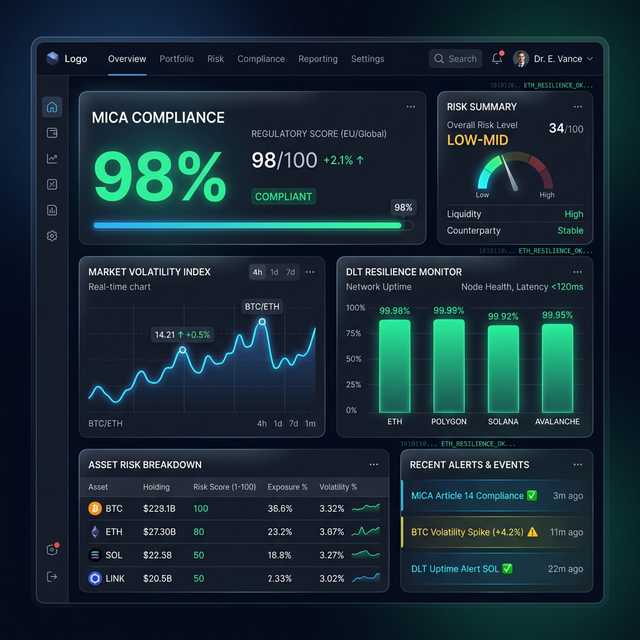
Read the full framework: Blockchain Risk Governance (EU 2026)
Next step: Explore operational resilience with DORA or return to the Resource Center.
Breaking Analysis: Explore the operational implications of the MiCA Day Zero Enforcement Threshold (1 July 2026).